
Managed Hermes Hosting vs Self-Hosting
A practical comparison for builders who want Hermes-class agent workflows without taking on another infrastructure project.
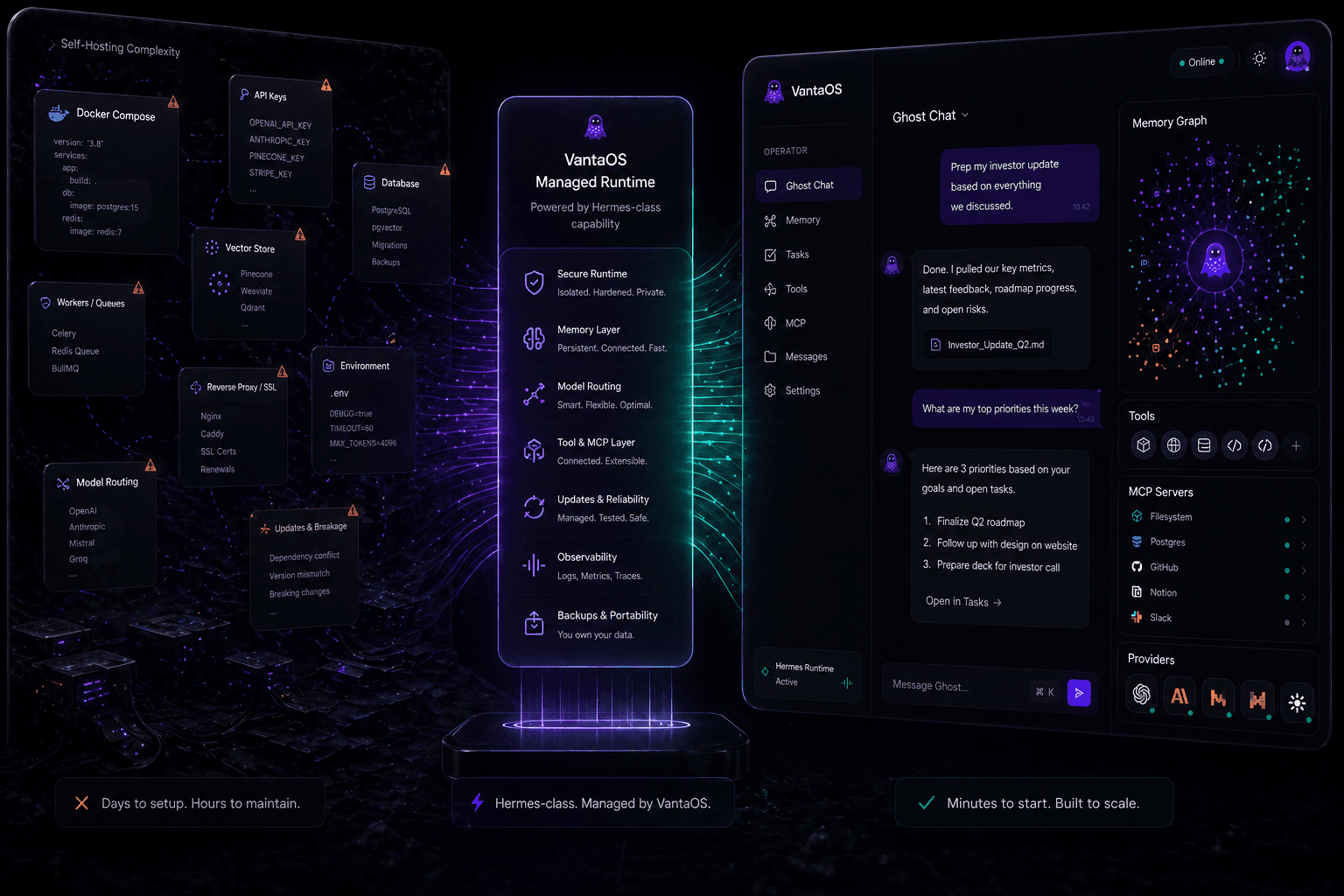
The self-hosting trade
Self-hosting is attractive when you need total control, local experimentation, or custom deployment constraints. Hermes is an ambitious open-source agent framework, so technical teams naturally want to understand the raw system.
The trade is operational load. Docker, provider keys, databases, runtime updates, security posture, and model routing become your responsibility before the first useful operator moment.
What managed should mean
Managed hosting should not mean hiding the source of the capability. It should mean turning a powerful framework into a product surface: onboarding, memory visibility, status, exports, and a calmer way to work every day.
That is the VantaOS position. Hermes provides the agent category signal; Ghost is the product layer built for founders who need outcomes instead of another weekend project.
- Runtime setup is handled before the user arrives.
- The operator interface exposes memory and work state.
- Claims stay tied to what the product actually ships.
When self-hosting still wins
Self-hosting is still the right choice for teams with strict infrastructure requirements, internal ML capacity, or a need to modify the agent runtime directly. VantaOS should not pretend otherwise.
The managed path wins when the bottleneck is not capability, but activation energy.